
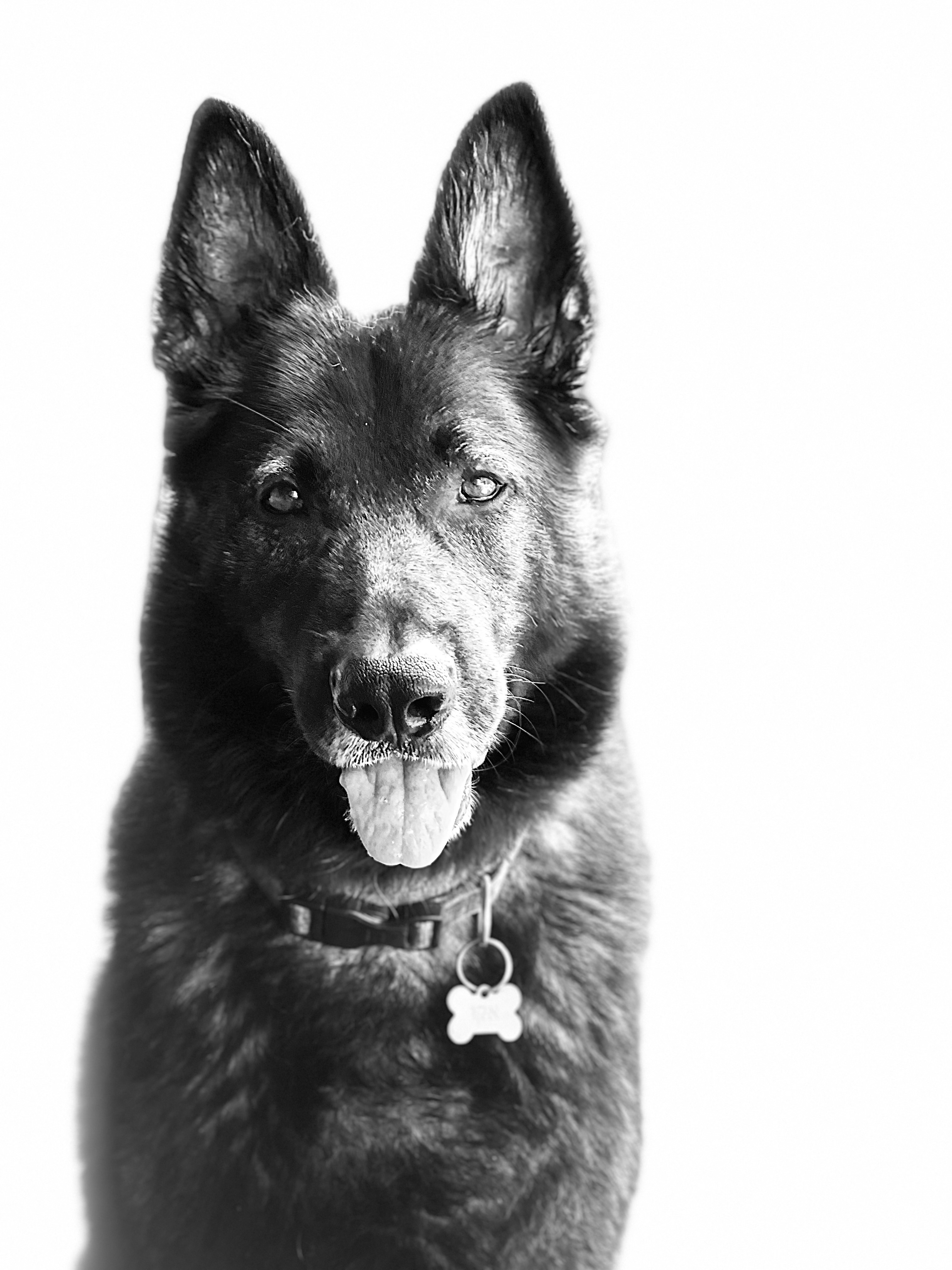
German Shepherds and Belgian Malinois can look similar at a glance. Both have upright ears and an athletic appearance, and both are associated with working roles.
They are distinct breeds with different origins.
The German Shepherd developed in Germany. The Malinois comes from Belgium and takes its name from the Malines region. Their shared herding background helps explain some of the similarities that can make identification confusing. The AKC explains their histories and differences.
What differences can you see?
A German Shepherd generally has a body outline that is longer than it is tall. A Malinois tends to look squarer and lighter in build.
Coats also offer clues. German Shepherds have a range of colours and patterns. The familiar Malinois appearance includes a short coat and a dark facial mask.
These are useful tendencies, not a reliable identification test for every photograph. Pose, perspective and individual variation can make visual guesses uncertain.
Which breed is easier to live with?
A breed comparison cannot decide that for your household.
Both breeds require meaningful investment in training and activity. The AKC describes the Malinois as particularly energetic and work-focused, while German Shepherds also need physical and mental engagement. Read the AKC comparison.
Instead of asking which breed is “better”, consider what you enjoy doing with a dog and what you can sustain.
Would you still enjoy regular training when progress is slow? What happens on long workdays? Who helps when you travel?
Your answers should shape the search.
Compare individuals, not just descriptions
When meeting a potential dog, ask for observations in ordinary situations.
How does the dog settle? What happens around unfamiliar people or other animals? Which activities does the dog enjoy? What does the current carer find challenging?
For puppies, discuss the parents, early environment and health screening with the breeder. For an adoption, discuss the available history and support with the rescue or placement organisation.
Take notes. It is easy for an impressive appearance to overshadow practical details during a first meeting.
What breed was Echo?
Echo was a dark sable working line German Shepherd.
A resemblance to another dog, including one seen in a film, does not establish that they share the same breed or background. Echo’s identity comes from his own history.
His story also reaches beyond a comparison of breeds. After his life as a police dog and the illness that followed, he was adopted into a family. The bond that followed inspired A Dog Named Echo.
Keep Exploring
Related reading:
Stay Close to the Story
Get new stories, guides and MyEcho launch updates by email.
By signing up, you acknowledge the Privacy Policy and agree to the Terms.