
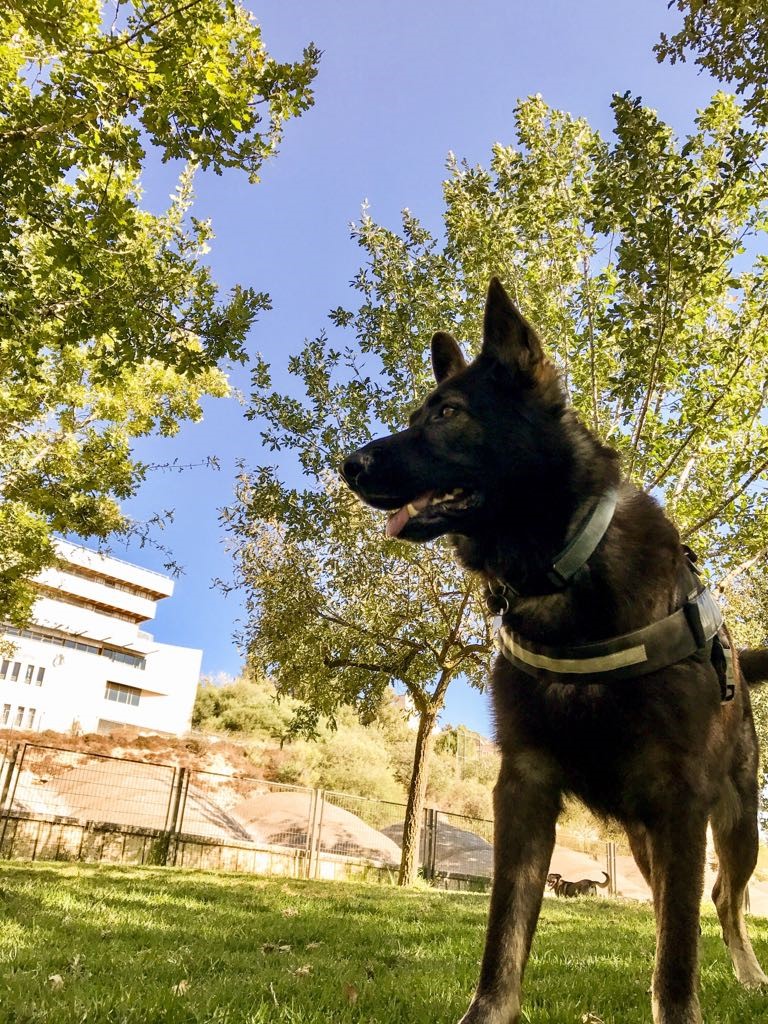
A working line German Shepherd is a German Shepherd from a breeding background that emphasises working ability. The term describes a breeding focus, not a separate breed and not a guarantee of a particular personality.
For someone meeting a dog like Echo for the first time, the attraction may be immediate: an impressive outline, an attentive expression and a presence that fills the frame.
Understanding the dog takes more than recognising the look.
What does “working line” actually tell you?
The German Shepherd has a long working heritage. Within the breed, breeders may place different emphasis on working performance, conformation and other goals.
“Working line” is useful background, but a meaningful conversation should go further. What work were the parents assessed for? What is known about their temperament? What health screening was carried out? What does the individual dog show in everyday situations?
Treat the label as the beginning of those questions.
The breed’s wider working character is described in the German Shepherd Dog Club of America’s breed standard.
What people mean by “drive”
In conversations about working dogs, “drive” is often shorthand for a dog’s motivation to pursue an activity or reward.
That might involve searching, chasing a toy or repeatedly engaging in a task. A description such as “high drive” is more useful when someone explains what they have actually observed.
Ask: motivated by what, in which setting, and with what ability to disengage?
That gives you more information than a dramatic video of a dog working at full intensity.
What might everyday life include?
Think in terms of a varied routine rather than one exhausting activity.
There can be time for walking and exploring, short training sessions, appropriate play and opportunities to rest. Activities such as scent work, obedience and tracking offer ways for owners to work with their dogs. The AKC’s guide to German Shepherd activities introduces several possibilities.
The right activities depend on the individual dog. Age, health and fitness matter when planning exercise; a veterinarian can help adapt it. PDSA explains these factors in its exercise guidance.
A useful ownership question is whether you would enjoy that daily involvement even when you are busy, tired or no longer impressed by the novelty.
Can you recognise working lines from a photograph?
A photograph can show colour, build and posture. It does not provide a pedigree, a temperament assessment or a history of training.
For a dog you are considering, ask for records and direct observations. Avoid treating a dark coat, a particular stance or a powerful appearance as proof of working ability.
Where Echo fits into this story
Echo was a dark sable working line German Shepherd and a police dog. After he became ill, he was adopted into a family.
Those facts introduce his background. A Dog Named Echo tells the personal story of the bond that followed.
Keep Exploring
Related reading:
Stay Close to the Story
Get new stories, guides and MyEcho launch updates by email.
By signing up, you acknowledge the Privacy Policy and agree to the Terms.